|
"I Want My Hat Back" is a humorous and engaging children's book written and illustrated by Jon Klassen. The story follows a bear who has lost his beloved hat and embarks on a quest to find it. As he questions various forest animals, he becomes increasingly frustrated until he finally realizes where his hat has gone. The book features simple yet expressive illustrations and a clever, surprising twist that will delight children and adults alike. With its dry humor and charming storytelling, "I Want My Hat Back" is a captivating read-aloud book that encourages children to think critically and pay attention to details. Happy Reading!
0 Comments
Feeling sad is a natural emotion that we all experience from time to time. However, it's important to remember that we can choose joy even in difficult times. Doing things that make us happy can help us feel better and turn our day around.
|
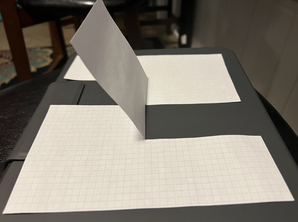 | 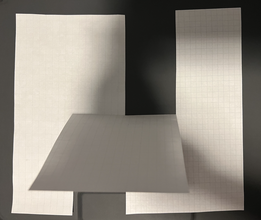 |
Try this fascinating challenge. See if you can figure out the cuts and folds to make the design. The process requires observing, guessing, testing, and trying again. Once you figure out how to solve the cutting and folding, try to draw the optical illusion.
Tangle Drawing Challenge
I learned how to create tangle drawings in 2012. I enjoy the intricate drawing style; I become caught up in the intricate patterns when I compose the designs.
Tangle Drawing Challenge
I learned how to create tangle drawings in 2012. I enjoy the intricate drawing style; I become caught up in the intricate patterns when I compose the designs.
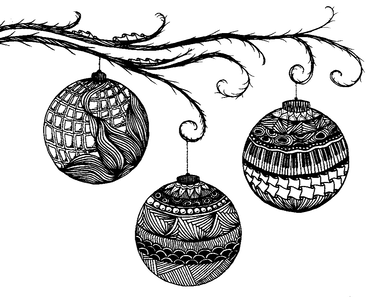
I often feel that the early days of autumn seem to drag on until we return the clocks back to "standard time." The concept of "Daylight Saving Time" has a long history, with the earliest proposal dating back to Benjamin Franklin in 1784. Germany implemented DST in 1915, followed by England introducing "British Summer Time" in 1916. The United States adopted DST in 1918, but it was short-lived, as it lasted only until 1920 due to resistance from farmers. The idea resurfaced during World War II. Today, some regions observe DST while others do not. In 2021, many states proposed legislation to end DST, but the outcome remains uncertain. Regardless of future changes, I eagerly anticipate November 7th when we gain back the hour we "lost" earlier in the year! (LOL)
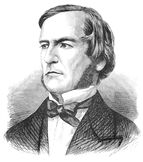
Have you ever wanted to look up something and could not find what you wanted? Well, how about asking a 19th century mathematician? Sounds absurd, right? It is surprisingly well founded.
George Boole wrote THE MATHEMATICAL ANALYSIS OF LOGIC (1847) and AN INVESTIGATION OF THE LAWS OF THOUGHT(1854). He was considered a mathematical genius and is considered one of the fathers of computer science. The term "Boolean Search" is based on his name. Do you want to learn more? Here is a good place to begin: Complete a search "What does Boolean Search Mean?
Have fun learning!
George Boole wrote THE MATHEMATICAL ANALYSIS OF LOGIC (1847) and AN INVESTIGATION OF THE LAWS OF THOUGHT(1854). He was considered a mathematical genius and is considered one of the fathers of computer science. The term "Boolean Search" is based on his name. Do you want to learn more? Here is a good place to begin: Complete a search "What does Boolean Search Mean?
Have fun learning!
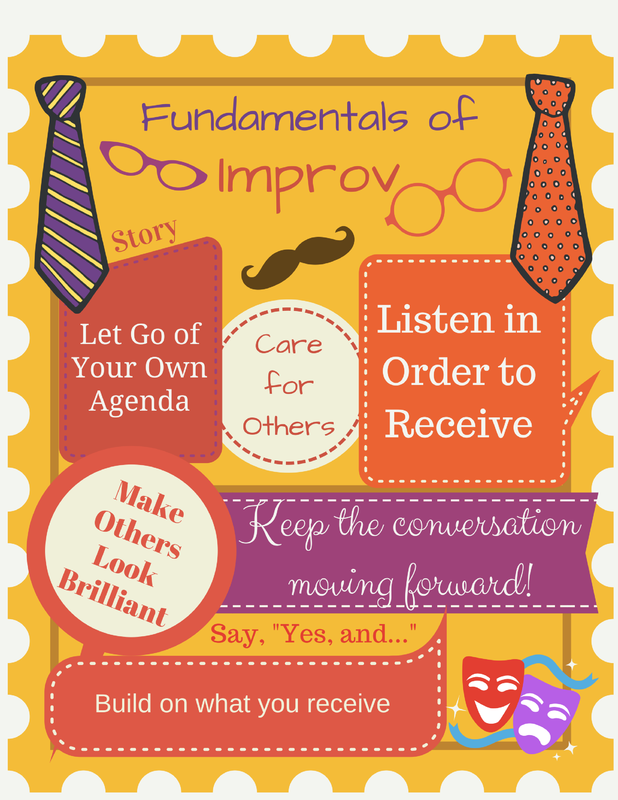
People who learn the art of improv can manage just about any situation they face. The art of Improv taught in the classroom provides teachers and children with a tangible way to discuss topics, solve problems, and heal relationships. I use Improv in a multitude of ways. Here are a few examples:
1. A teacher came to me with a student who was having difficulty getting along with his partners while working on a project. He and I discussed how using the Fundamentals of Improv to help his group succeed and do well on the project.
2. When having a discussion about famous inventors, we talked about how listening helps keep the conversation moving forward so people do not repeat the same things over and over again.
3. A student turned in her writing assignment and had not finished all the elements of the rubric. I found one area where she did well and said, "This part of your story shows an example of creative thinking, you really tapped in to your imagination." This demonstrates a "YES" to her work. Then I quickly follow up by saying, "And, I wonder if you have an analogy to give your readers a visual picture of what you imagine in this scene."
These are just a few examples. Once you get in the habit of using improv, you will use it multiple times each day. I made this poster to help my students have a reminder about how to use this tool. I hope you will find it useful too.
1. A teacher came to me with a student who was having difficulty getting along with his partners while working on a project. He and I discussed how using the Fundamentals of Improv to help his group succeed and do well on the project.
2. When having a discussion about famous inventors, we talked about how listening helps keep the conversation moving forward so people do not repeat the same things over and over again.
3. A student turned in her writing assignment and had not finished all the elements of the rubric. I found one area where she did well and said, "This part of your story shows an example of creative thinking, you really tapped in to your imagination." This demonstrates a "YES" to her work. Then I quickly follow up by saying, "And, I wonder if you have an analogy to give your readers a visual picture of what you imagine in this scene."
These are just a few examples. Once you get in the habit of using improv, you will use it multiple times each day. I made this poster to help my students have a reminder about how to use this tool. I hope you will find it useful too.
I wonder if anyone can explain the relationship between fractals and cell phones. There is a connection, and it is fascinating! What interests me is the fact that fractals have been in the world since the beginning of time; however, cell phones are relatively new.
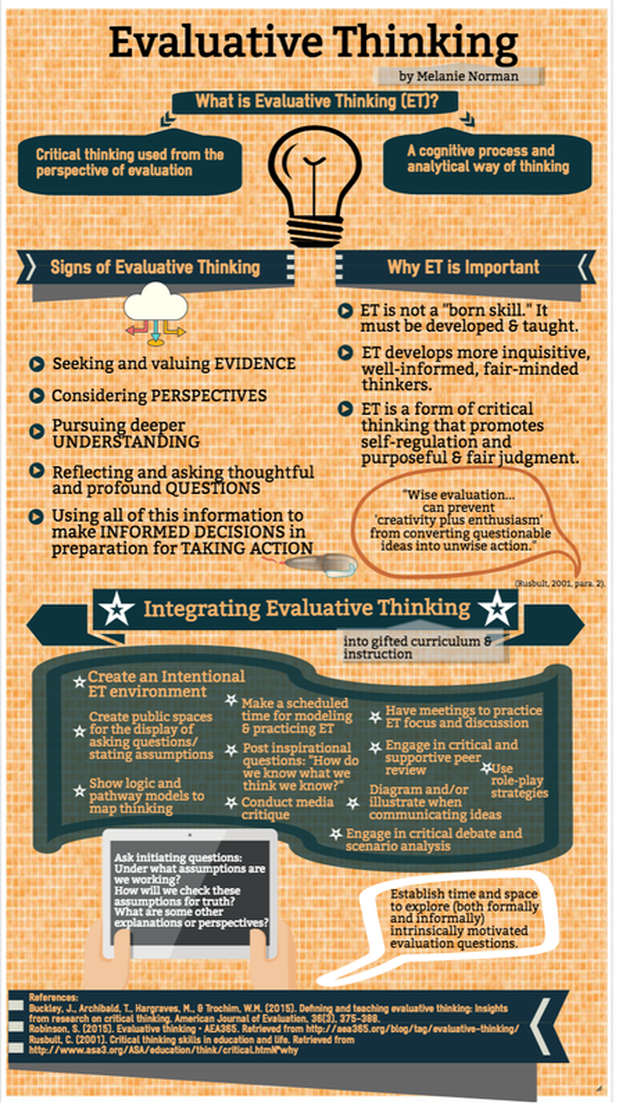
This infographic by my daughter intrigues me. There are so many points of wisdom that it takes a while to digest it all. The parts that stood out to me were the ideas that evaluative thinking helps us make wise decisions and this skill should be taught.
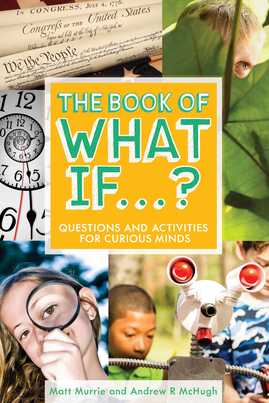 | This book by Matt Murrie and Andrew R. McHugh inspires my students! Right now it stays on top of the bookshelf where students can readily grab a copy when they want to read. They say it is "inspirious" (I'm guessing that means inspiring and curious). They are following the example of Shakespeare by adding new words to their vocabulary. Last Tuesday, they were consumed by writing short thank you videos to Matt Murrie because he is coming to visit our classroom next week. They used WeVideo. We started the project by creating a class project. Since I did not have a firm grasp, I enlisted one adventuresome student to begin the project and share it with the class in Google Classroom. They inspired me, and I smile when I watch their final products. I hope you enjoy the video. |

When I was a child, living in Tehran, Iran, our family had a concrete swimming pool. Each year, we emptied the pool and put a fresh coat of paint on the surface. The first few weeks after we filled it with fresh water, it was icy cold. After experimentation, I concluded that the most efficient and least painful way to get into the pool was to dive in rather than go in bit by bit. Now, as an adult, I approach almost every new challenge with the same strategy. In an ever changing world, we encounter new experiences all the time. If we hesitate, and just go bit by bit, we will be left behind. So go ahead; jump and dive in, and experience the challenge.
Pearl
Pearls take time to form; likewise, our words should be chosen carefully and with thought.
Archives
February 2024
November 2021
October 2021
July 2020
February 2018
January 2017
October 2016
July 2016
June 2016
October 2015
April 2015
March 2015
February 2015
January 2015
November 2014
June 2014
February 2014
December 2013
November 2013
October 2013
August 2013
May 2013
September 2012
June 2012
 RSS Feed
